
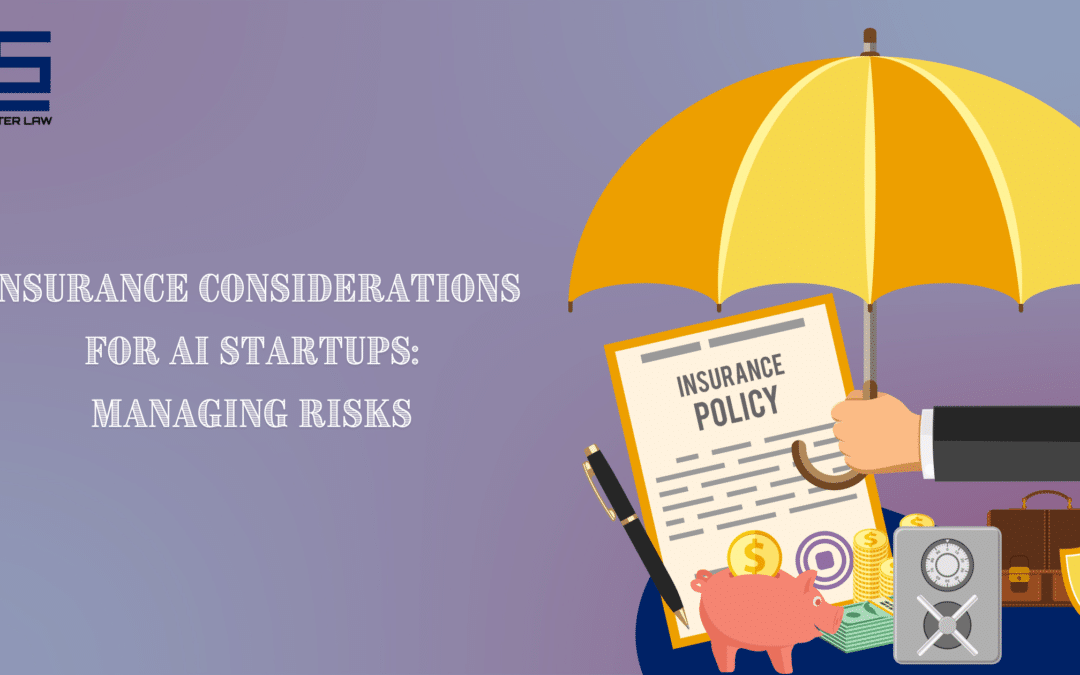
AI startups generally need the same core insurance as other technology companies, including general liability, workers’ compensation, directors and officers (D&O), technology errors and omissions (E&O) and cyber coverage, plus careful attention to how those policies treat AI-specific risks such as model errors, intellectual property claims and data misuse. Insurance is one layer of risk management; contracts, compliance programs and good governance do much of the remaining work.
A founder building a product on large language models often assumes a standard startup insurance package covers everything. It may not. Insurers are still adjusting how they underwrite AI, and policy wording, exclusions and limits matter more than the policy name. Here is how to think about the risks and the coverage.
The Main Risks AI Startups Face
Product and performance failures
AI systems can produce inaccurate, biased or harmful outputs. If a customer relies on your model’s recommendation and loses money, you may face a claim for breach of contract, negligence or misrepresentation. If an AI product controls physical equipment, such as robotics or vehicles, bodily injury and property damage claims become possible as well.
Intellectual property claims
Several lawsuits have challenged whether training AI models on copyrighted material without permission is lawful, and courts have reached different results on different facts. AI companies may also face claims that model outputs infringe copyrights or trademarks, or that they misused trade secrets. These cases are still developing, so the risk is real but its scope is uncertain. See our discussion of intellectual property issues for startups.
Privacy and data security
AI businesses often collect and process large amounts of personal information. California’s Consumer Privacy Act (CCPA), as amended by the CPRA, the EU’s General Data Protection Regulation (GDPR) for companies serving EU residents, and other state privacy laws impose obligations on how data is collected, used and protected. Data breaches can trigger notification duties, regulatory investigations and private lawsuits. Our post on cybersecurity laws for AI startups covers these duties in more detail.
Regulatory risk
AI-specific rules are expanding, including California regulations on automated decision-making, state laws on AI in employment decisions, the EU AI Act for companies operating in Europe, and Federal Trade Commission enforcement against deceptive AI claims. Regulatory fines and penalties are often not insurable, but defense costs sometimes are.
Employment practices
Using AI tools to screen or evaluate job applicants can raise discrimination concerns under California’s Fair Employment and Housing Act and federal law. Like any employer, an AI startup also faces wage-and-hour, wrongful termination and harassment claims.
Types of Insurance to Consider
- General liability. Covers bodily injury and property damage claims arising from your operations, along with certain advertising injury claims. It typically does not cover professional errors or data breaches.
- Technology errors and omissions (Tech E&O). Responds to claims that your software or services failed to perform as promised or caused a customer financial loss. For most AI companies, this is a central policy.
- Cyber liability. Covers costs from data breaches and security incidents, such as forensic investigation, notification, credit monitoring, ransomware response, and third-party claims. Many policies also cover business interruption caused by a cyber event.
- Directors and officers (D&O). Protects directors and officers against claims tied to their management decisions, including claims by investors or regulators. Venture investors commonly require it.
- Employment practices liability (EPLI). Covers claims of discrimination, harassment, wrongful termination and retaliation. Wage-and-hour claims are frequently excluded or sublimited.
- Workers’ compensation. Required for California employers with employees.
- Intellectual property insurance. Stand-alone IP policies can cover the cost of defending infringement claims or enforcing your own IP. Availability and price vary, and coverage for AI training claims may be limited.
- Product liability. Important if your AI controls hardware or physical processes that could injure people or damage property.
Read the Policy, Not Just the Label
Two policies with the same name can respond very differently to an AI-related claim. When reviewing coverage, look closely at:
- AI and IP exclusions. Some insurers have introduced exclusions for claims arising from AI outputs or from use of training data. Ask whether any apply.
- Definitions. Check how the policy defines “technology services,” “wrongful act” and “data.” Your actual product should clearly fall within the definitions.
- Contractual liability exclusions. Policies often exclude liability you assume by contract, such as broad indemnities you give customers.
- Regulatory coverage. Find out whether defense costs for regulatory investigations are covered and whether fines are insurable where the law permits.
- Limits, retentions and sublimits. A large headline limit can include smaller sublimits for ransomware, social engineering or privacy claims.
- Claims-made timing. E&O, cyber, D&O and EPLI are usually claims-made policies. Gaps in coverage when switching insurers can leave you exposed.
Insurance Works Alongside Contracts
Insurance is only one tool. Your customer and vendor agreements allocate much of your AI risk before any claim reaches an insurer. Limitation of liability clauses, disclaimers about AI output accuracy, indemnification terms and insurance requirements should be consistent with the coverage you actually carry. Promising customers an uncapped IP indemnity that your insurance excludes, for example, leaves the company itself responsible. Our post on contract review explains how to spot these issues.
Good internal practices also matter to insurers. Documented data governance, security controls, model testing, human review of high-risk outputs and clear records of training data sources can make a company easier to insure and may improve terms.
Practical Steps for Founders
- Map your risks: what your product does, what data it uses, who relies on its output, and what could go wrong.
- Work with an insurance broker who places technology and cyber coverage and ask specific questions about AI exclusions.
- Review customer contracts to confirm that indemnities and liability caps align with your coverage.
- Revisit coverage at each financing, major product launch or expansion into a new market.
The Takeaway
AI startups face familiar business risks plus newer ones tied to model output, training data and fast-changing regulation. The right insurance program usually combines Tech E&O, cyber, D&O, EPLI and general liability, but the details of each policy determine whether it will respond to an AI-related claim. Pair insurance with well-drafted contracts and sound compliance practices.
Frequently Asked Questions
Is business insurance legally required for an AI startup?
Most business insurance is not legally required, but there are exceptions. California employers must carry workers’ compensation insurance once they have employees, and customers, landlords and investors often require specific coverage by contract. Even when coverage is optional, a single uninsured claim can be a serious financial event for an early-stage company.
Does cyber insurance cover claims that an AI model infringes copyrights?
Usually not by default. Many cyber and technology errors and omissions policies exclude or limit intellectual property claims, and some insurers have added AI-specific exclusions. Startups should ask brokers directly how the policy treats IP infringement, training data claims and AI-generated output, and read the exclusions before binding coverage.
What is the difference between technology errors and omissions insurance and cyber insurance?
Technology errors and omissions insurance responds to claims that your product or service failed to perform or caused a customer financial loss. Cyber insurance responds to data breaches, network security incidents and related costs such as notification and forensics. Many insurers sell them together, but they cover different risks.
When should a startup buy directors and officers insurance?
Many startups add directors and officers insurance around their first priced financing, when outside investors join the board. Investors often require it, and it can help protect individual directors and officers from claims tied to their management decisions.
How Sutter Law Can Help
We advise AI and technology companies on contracts, risk allocation, privacy and corporate matters, and we can work alongside your insurance broker when you review coverage and customer terms. Learn more about our AI startup legal services, or contact us for a free consultation.
This article is general information, not legal advice. Reading it does not create an attorney-client relationship.