
Table of Contents
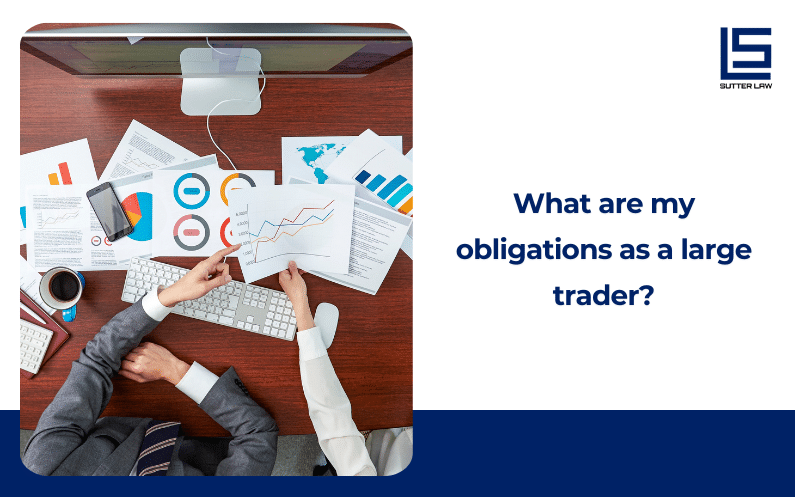
Did you know most startup founders filing their initial public offering (IPO) are identified as large traders? Then the clock begins ticking. Are you confused about whether you are considered a large trader and what to do next? Keep reading.
The basic obligations for large traders stem from the Securities and Exchange Commissions’ Large Trader Rule (Rule 13h-1) and apply to a “large trader,” which is generally defined as a person (including an entity or natural person, domestic or foreign) whose transactions in NMS securities meet or exceed certain thresholds.
1. Registration Threshold
A person becomes a “large trader” and is required to register as such if their transactions in National Market System (NMS) securities equal or exceed one of the following identifying activity levels:
- 2 million shares or $20 million during any calendar day.
- 20 million shares or $200 million during any calendar month.
NMS securities generally include publicly traded equity securities listed on national exchanges.
2. Filing Requirements
Once reaching the required threshold, large traders are required to self-identify to the SEC by making several types of Form 13-H electronic filings on through the SEC’s Electronic Data Gathering, Analysis, and Retrieval (EDGAR) system:
- Initial Filing (Form 13H) Must be filed promptly (which the SEC interprets as within 10 days under normal circumstances) after first reaching the identifying activity level. A person may also make a voluntary initial filing before reaching that threshold.
- Annual Filing (Form 13H-A): A mandatory annual filing is due within 45 days after the end of each full calendar year.
- Quarterly Filing (Form 13H-Q): Must be filed within 10 days after the end of any calendar quarter if the information in the most recent filing has become inaccurate or has changed.
3. Large Trader Identification (LTID)
Upon the initial filing of Form 13H, the SEC assigns the large trader a unique Large Trader Identification Number (LTID), which the large trader must then disclose to all U.S.-registered broker-dealers that effect transactions on their behalf, along with all accounts to which the LTID applies.
4. Inactive Status.
If a registered large trader fails to meet the activity thresholds in the previous full calendar year and determines that they do not expect that they will meet the threshold again, they can declare their inactivity by filing a form 13H-I for inactivate status, which allows the large trader to reduce their filing burdens.
In the event the trader exceeds the filing threshold again, they can reactivate their large trader status by Filing a Form 13H-R.
If you have been contacted by the SEC about your trading status, you will need immediate assistance.
Sutter Law’s experienced Business Security Attorneys are ready to step in on your behalf. Reach out today to speak to us, and let us handle the legalities so that you can focus on what you do best: your business.